

Manufacturing
Good Taste: A true test of craftsmanship
For over 90 years, Jägermeister has been crafted from a secret recipe of 56 carefully selected herbs, blossoms, roots and fruits from around the world. A total of 383 quality checks are performed before a Jägermeister bottle is filled with the final product, resulting in a herbal liqueur that is unique – in quality and in taste.
The botanical raw materials
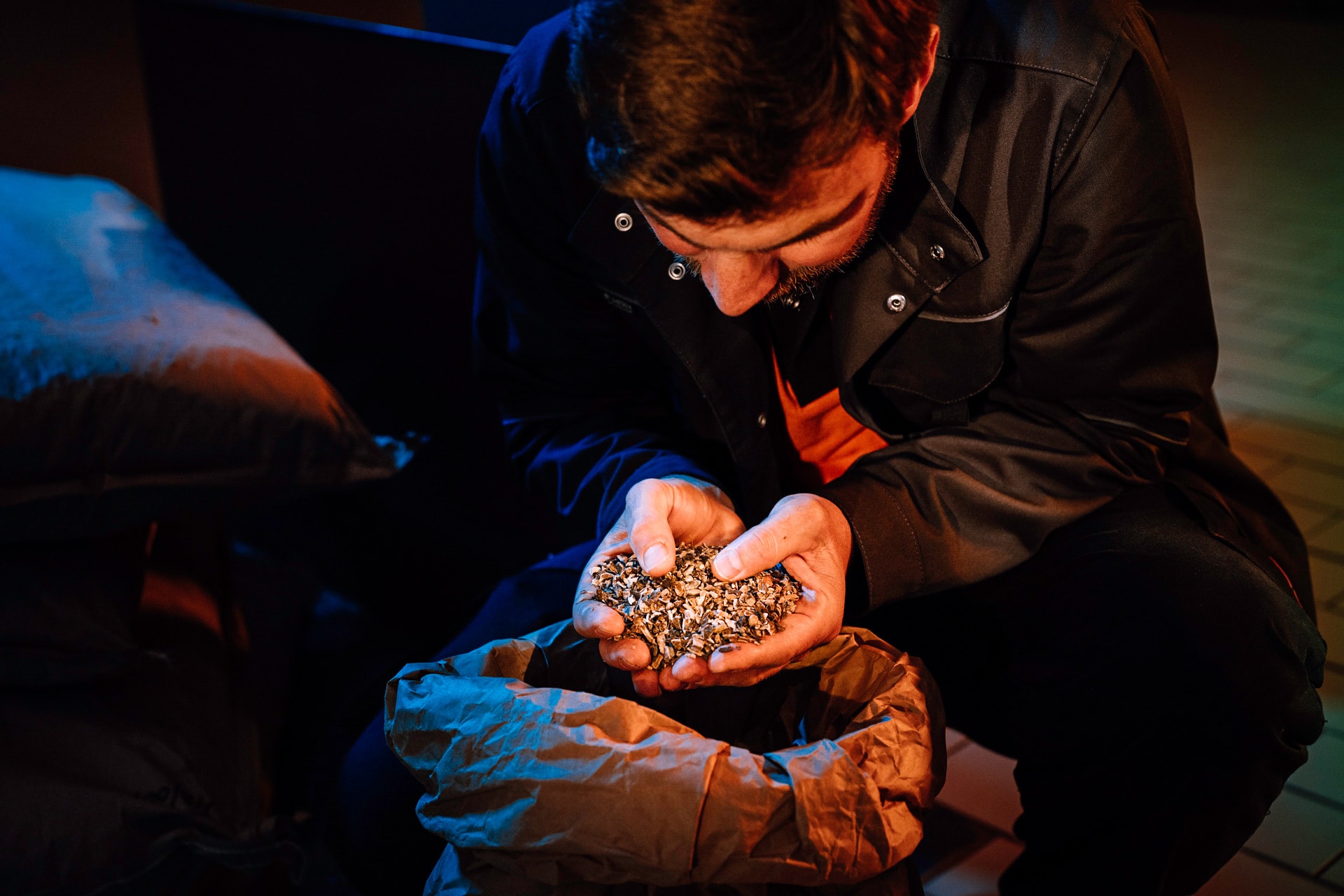
56 different herbs, blossoms, roots and fruits are used in its production including star anise, cinnamon, ginger roots and a blend of secret herbs. In order to have the very best quality herbs, the company does not buy mixtures of various plant parts or even their extracts, but the raw material in its original, non-processed form.
1
Our quality checks
Ingredients are sourced from around the world and before use, are always tested for quality, taste and scent. Additionally to a sensory test, all raw materials undergo analysis in Jägermeister’s in-house laboratory, where state-of-the-art equipment ensures that only the very best quality ingredients are used in the production process.
2
Processing
The well-kept Jägermeister recipe is brought to life by the master distillers. The individual ingredients are weighed precisely and then ground to produce various dry mixtures.
3
Maceration
These various mixtures are then placed in a blend of alcohol and water for several weeks, where they undergo a maceration process to extract the aromatic compounds, such as essential oils. The procedure is similar to the production of tea.
4
Our Jägermeister base
The master distillers then combine the various macerates to form a dark base, which is the heart and soul of Jägermeister’s legendary taste. This contains the concentrated quintessences of the herbs, blossoms, roots and fruits that are used. The alcohol content at this stage is over 50%.
5
Barrel storage
The Jägermeister base matures for around a year in large oak casks – about 400 of them at our headquarters in Wolfenbüttel, and around 80 more at our site in Kamenz. The oak barrels, some of which are more than 100 years old, have all been handmade from dense local wood from the “Pfälzer Wald” , a true feat of craftsmanship.
6
The finished product
Once the product is matured, the base is enriched with pure water, alcohol, caramelised sugar and liquid sugar. Only then is the Jägermeister we know and love ready to be filled into the world-famous green bottles.
7
Myths and legends
Since its creation more than 90 years ago, the recipe has remained a closely guarded secret. That secrecy has fueled countless speculations and myths over the decades.
Some of these persist to this day, even though they have little to do with reality. One common assumption, for example, is that certain ingredients are part of the recipe — even though they are not used at all. These include ginseng, poppy seeds, and juniper.
In fact, Jägermeister is made exclusively from natural ingredients and is therefore vegan. A blend of 56 herbs, blossoms, roots, and fruits forms the foundation of its distinctive taste.
8
The botanical raw materials
56 different herbs, blossoms, roots and fruits are used in its production including star anise, cinnamon, ginger roots and a blend of secret herbs. In order to have the very best quality herbs, the company does not buy mixtures of various plant parts or even their extracts, but the raw material in its original, non-processed form.
1
Our quality checks
Ingredients are sourced from around the world and before use, are always tested for quality, taste and scent. Additionally to a sensory test, all raw materials undergo analysis in Jägermeister’s in-house laboratory, where state-of-the-art equipment ensures that only the very best quality ingredients are used in the production process.
2
Processing
The well-kept Jägermeister recipe is brought to life by the master distillers. The individual ingredients are weighed precisely and then ground to produce various dry mixtures.
3
Maceration
These various mixtures are then placed in a blend of alcohol and water for several weeks, where they undergo a maceration process to extract the aromatic compounds, such as essential oils. The procedure is similar to the production of tea.
4
Our Jägermeister base
The master distillers then combine the various macerates to form a dark base, which is the heart and soul of Jägermeister’s legendary taste. This contains the concentrated quintessences of the herbs, blossoms, roots and fruits that are used. The alcohol content at this stage is over 50%.
5
Barrel storage
The Jägermeister base matures for around a year in large oak casks – about 400 of them at our headquarters in Wolfenbüttel, and around 80 more at our site in Kamenz. The oak barrels, some of which are more than 100 years old, have all been handmade from dense local wood from the “Pfälzer Wald” , a true feat of craftsmanship.
6
The finished product
Once the product is matured, the base is enriched with pure water, alcohol, caramelised sugar and liquid sugar. Only then is the Jägermeister we know and love ready to be filled into the world-famous green bottles.
7
Myths and legends
Since its creation more than 90 years ago, the recipe has remained a closely guarded secret. That secrecy has fueled countless speculations and myths over the decades.
Some of these persist to this day, even though they have little to do with reality. One common assumption, for example, is that certain ingredients are part of the recipe — even though they are not used at all. These include ginseng, poppy seeds, and juniper.
In fact, Jägermeister is made exclusively from natural ingredients and is therefore vegan. A blend of 56 herbs, blossoms, roots, and fruits forms the foundation of its distinctive taste.
8